Future Fitness for Public Pools
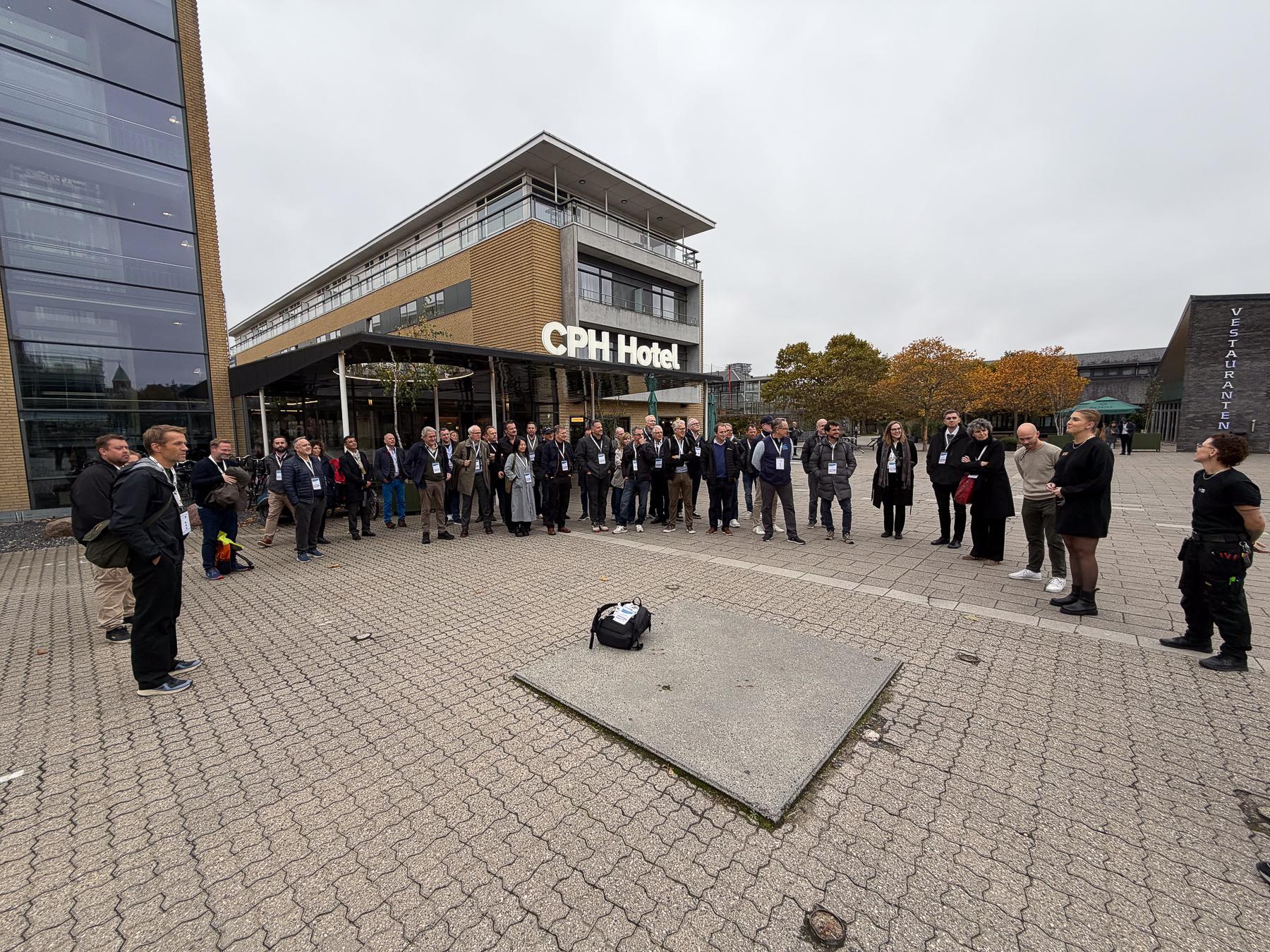
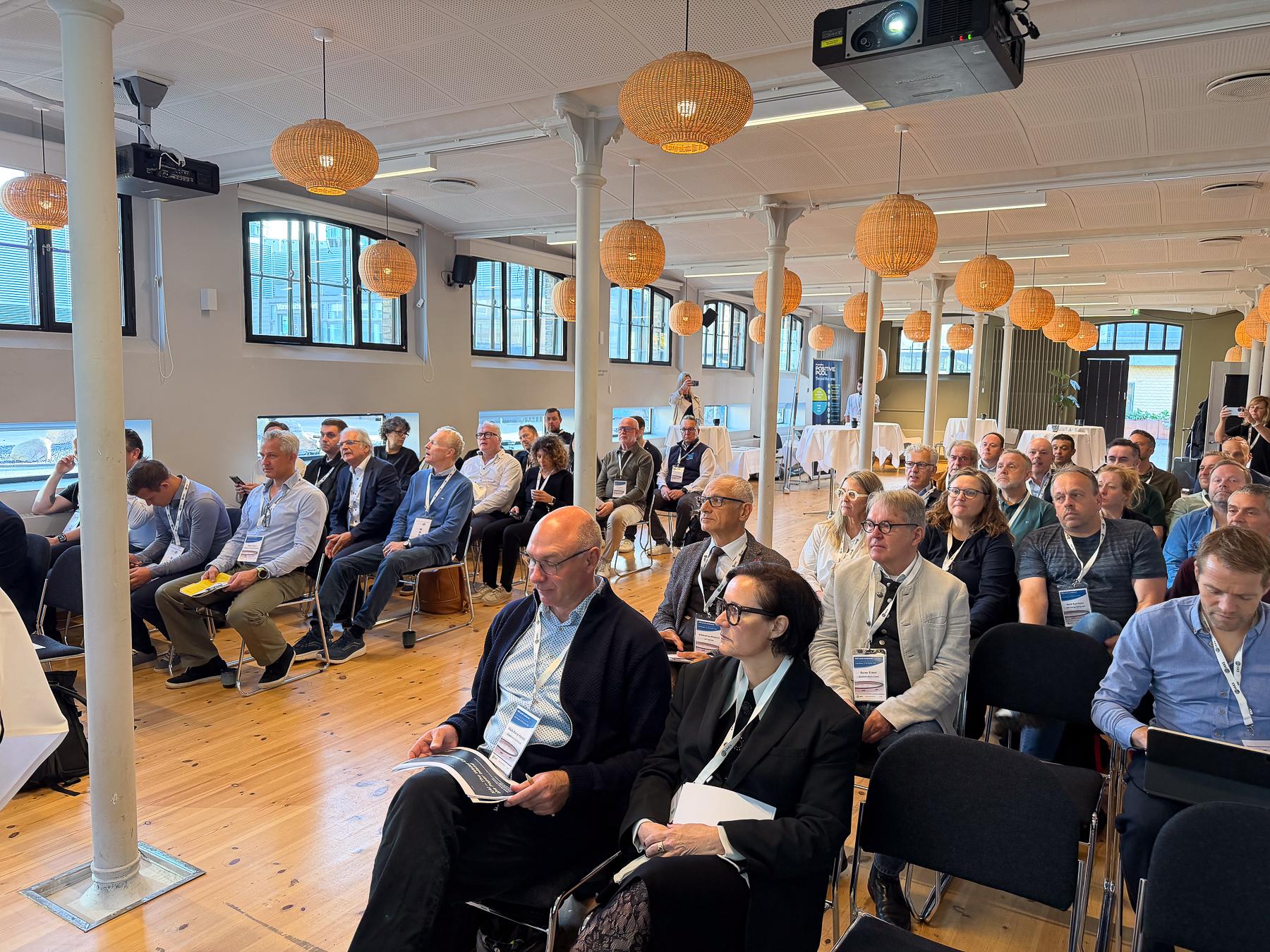
About 50 public pool operators, architects, engineers and suppliers from 12 countries met in Copenhagen for a high-level exchange about forward-looking strategies and fresh ideas for the future of public aquatic facilities. The conference was held with active support from LOA Fonden and the City of Copenhagen, and programmed by the IAKS Expert Circle Pools under the leadership of Dr Stefan Kannewischer.
All speakers‘ presentations are available to delegates and IAKS members. Please contact the IAKS office for accessing the download area.
© IAKS | Klaus Meinel
The event started with a visit of Copenhagen’s most innovative aquatic facilities: The recently renovated pool at DGI Byen and the brand-new Water Culture House.
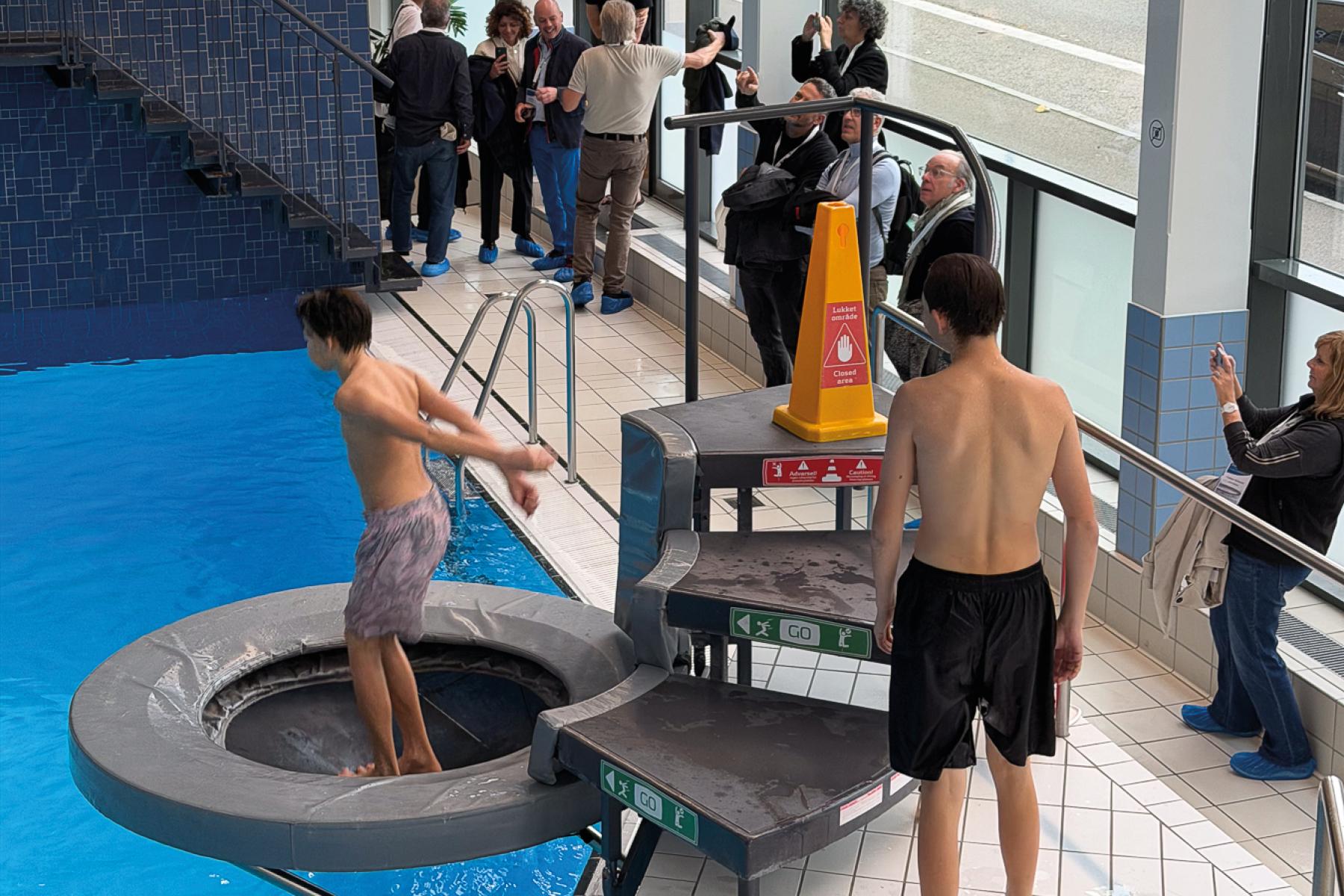
The DGI Byen pool impressed with its unconventional programme of pool tanks and bathing equipment. The facility hosts a circular swimmers’ pool instead of a conventional lap pool. The one-way direction of swim changes every week, in order to offer the swimmers a balanced training setup. At the dining pool, a trampoline instead of a diving platform offers the youth unexperienced jumping opportunities.
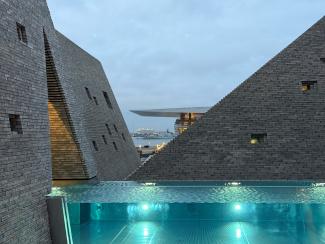
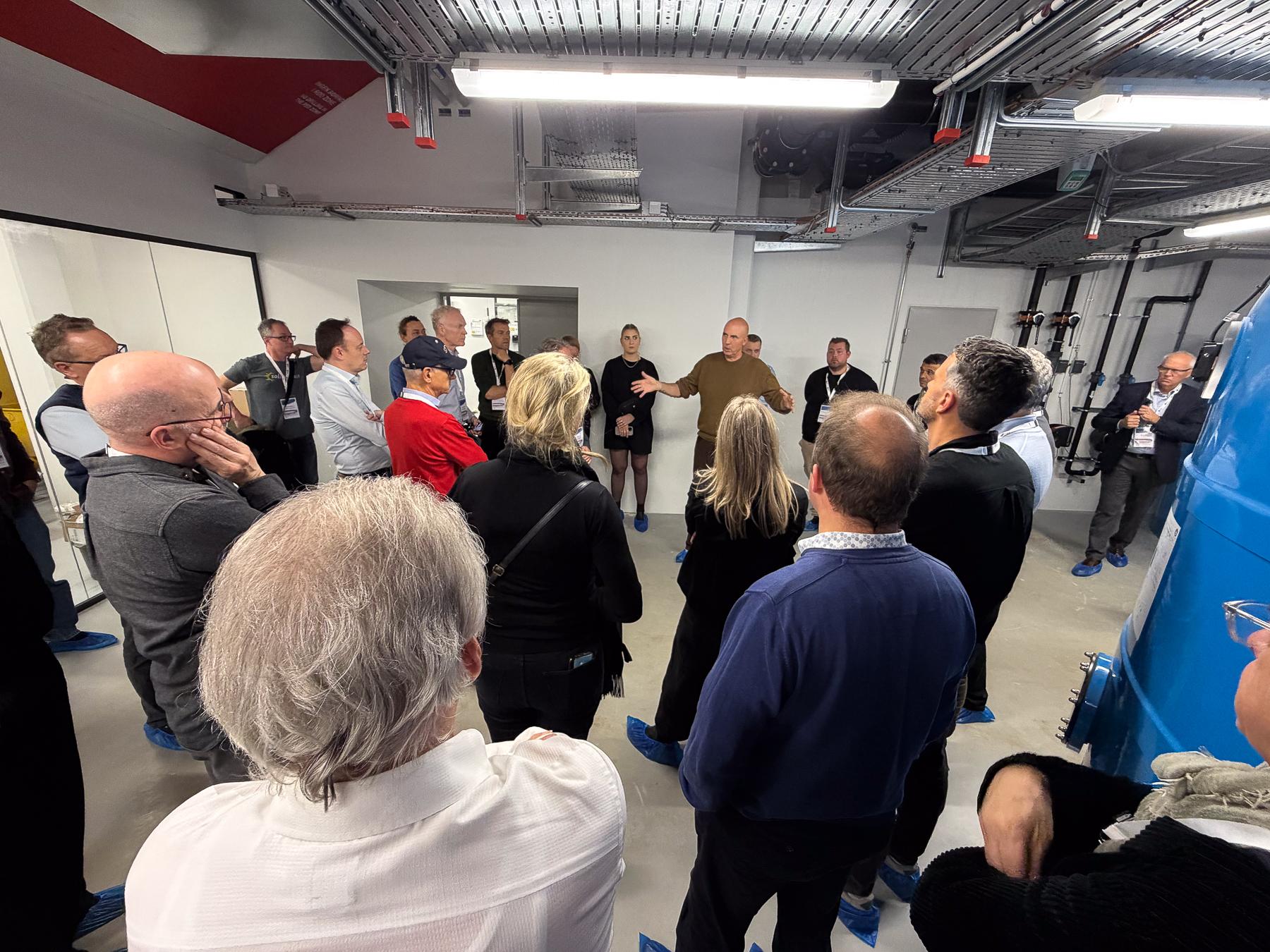
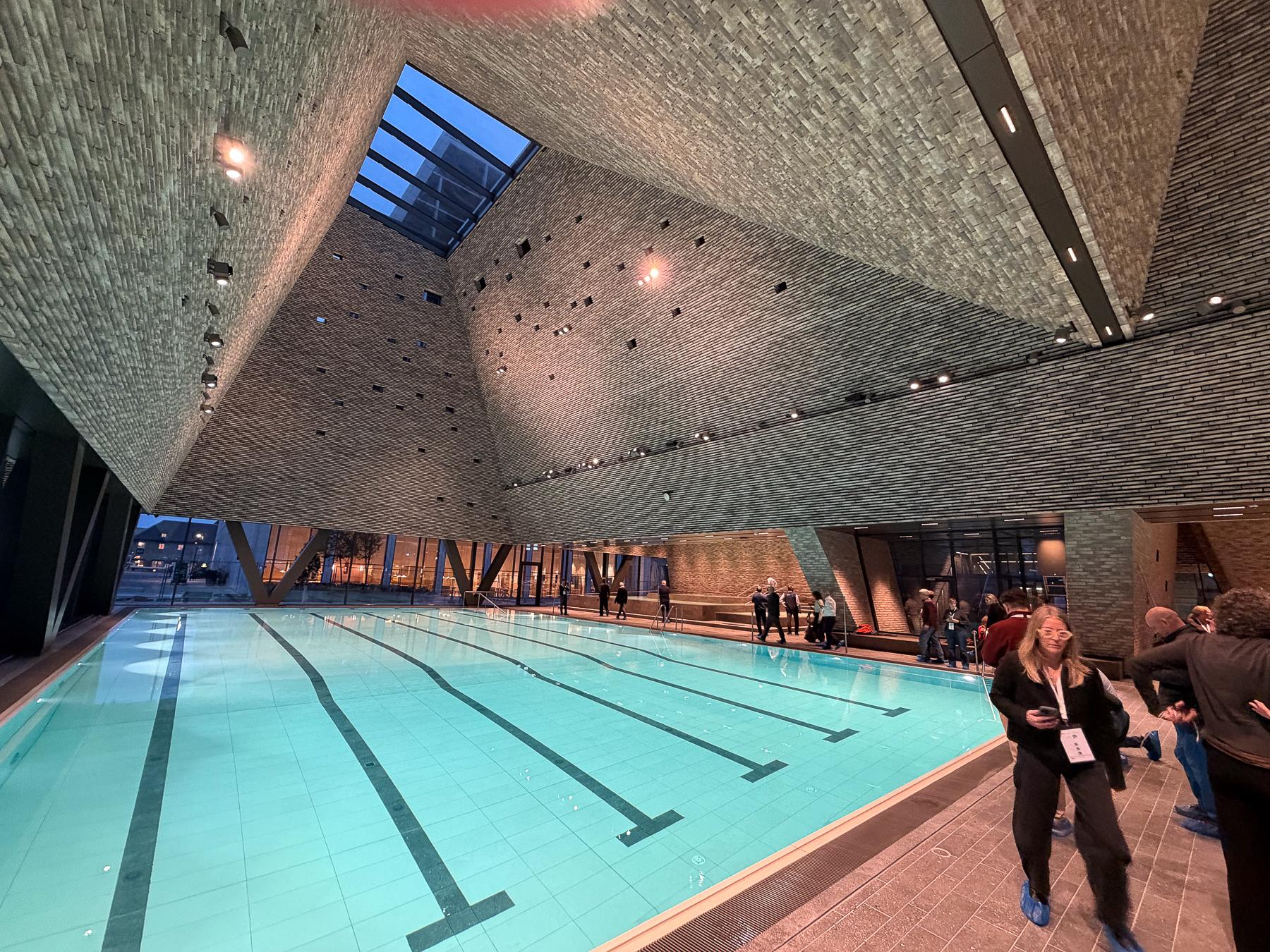
Afterwards, delegates were able to get first-hand insights of one Europe’s most significant and architecturally stunning public pool buildings: Water Culture House. Project leaders from the City of Copenhagen opened its doors to IAKS conference participants for the first public visit, explaining the architectural concept and guiding the IAKS group through the stacked pool building.
Water Culture House has been designed by Kengo Kuma & Associates as lead consultant with Vilhelm Lauritzen Arkitekter as executive architect. It will be inaugurated by King Frederic X of Denmark in December.
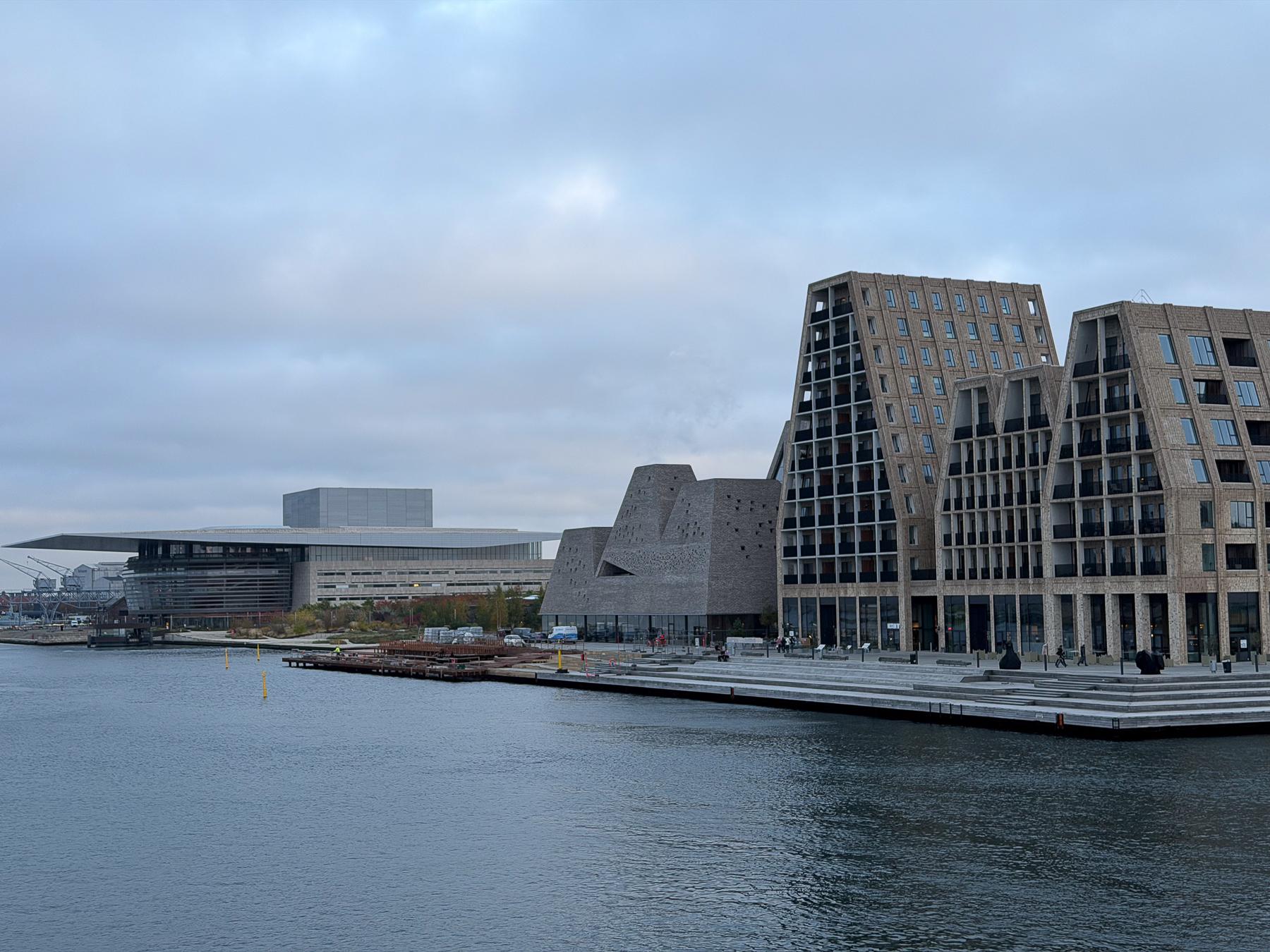
Water Culture House will serve as a new gathering point in the Copenhagen Harbour. Located next to the opera house and with a focus on both indoor and outdoor water activities, the building will provide a setting for unique experiences and offer state-of-the-art training and bathing facilities.
The main attraction is an outdoor pool located between the building’s roof surfaces, featuring heated water for a truly unique bathing experience. Outside, a harbour bath will be established with various swimming options for both children and adults.
The second day in the conference centre of DGI Byen started with welcome addresses by IAKS President Dr Darryl Condon and LOA Fonden Board Member Thomas Bach.
Aravni Elisabeth Jakobsen, Thomas Bach, Jacob Christian Schroder, and Mads Kamp Hansen, all representing the City of Copenhagen’s Culture, Leisure and Citizen Services administration, highlighted the significance of water in the history, culture and vibrant urban life in Copenhagen. Especially the creation of multiple harbour baths since 2003 has changed the citizen’s attitude towards bathing which is today a year-round recreation and socialising activity.
The second session offered a flow of technical perspectives based on findings from the IAKS Expert Circle Pools. Taio Waldhaus, Mike Hall and Mark Palmer explained the most important principles for low-energy, sustainable and well-performing swimming facilities, as well as introduced a new methodology for benchmarking the energy performance of public pools world-wide.
Melissa Higgs and Jens Oyas Moller form LOA fonden introduced “Ripple Effect”, an inspiration catalogue for inclusive and accessible aquatic facility design, which was highly appreciated by the experts present. Jakob Faerch from LOA Fonden followed with some more futurist ideas how young people could be better attracted to public pools.
The conference closed with latest technological applications proven in use. Thomas Meier looked from the operators’ perspective on digitalization in pools and gave an overview about where AI and other new technologies can support daily operations.
Finally, Ernst Ulrich Tillmanns presented the first modular and pre-build pool called ‘Pool out of the box’, which offers an opportunity to cities to overcome temporary pool closures due to renovation. The modular pools system has been built in one neighbourhood of the City of Stuttgart recently. Once the local pool’s renovation will have been finished, the system will move to a second neighbourhood for the same purpose, before finalizing its journey as a permanent pool in a third neighbourhood.
Read notes and reflections on the IAKS Pools Conference by RJ Houston (Chief Operating Officer at Royal Life Saving Society - Australia) 'Turning the tide on decline: how Copenhagen made swimming its fastest-growing recreational activity' on LinkedIn