Bild
Network
Digital prevention of swimming accidents
Publishing date
Advert by IAKS member Poseidon
In public swimming pools, the early detection of critical situations is a major challenge. Despite trained staff and clearly defined safety procedures, drowning accidents remain a significant risk, especially in heavily frequented facilities. Modern, camera-based assistance systems like those from Poseidon address this issue and enhance traditional supervision through precise and continuous analysis.
The technology relies on a combination of above- and underwater cameras that provide seamless coverage of the entire pool. The systems are individually tailored to the geometry and usage of a pool, ensuring that even complex facilities, such as those with movable floors or high occupancy, are reliably monitored. This complete visual coverage creates a digital ‘safety zone‘ in which all movements in the water are continuously analyzed.
At the heart of the solution is advanced image processing that analyzes swimmers’ behavior in real time. The system recognizes typical patterns of critical situations, such as immobility at the bottom of the pool. If such an event is identified, an alarm is triggered within seconds. In addition to the time of the event, the alarm message includes the exact location of the person involved as well as corresponding images. This enables lifeguards to react immediately and effectively.
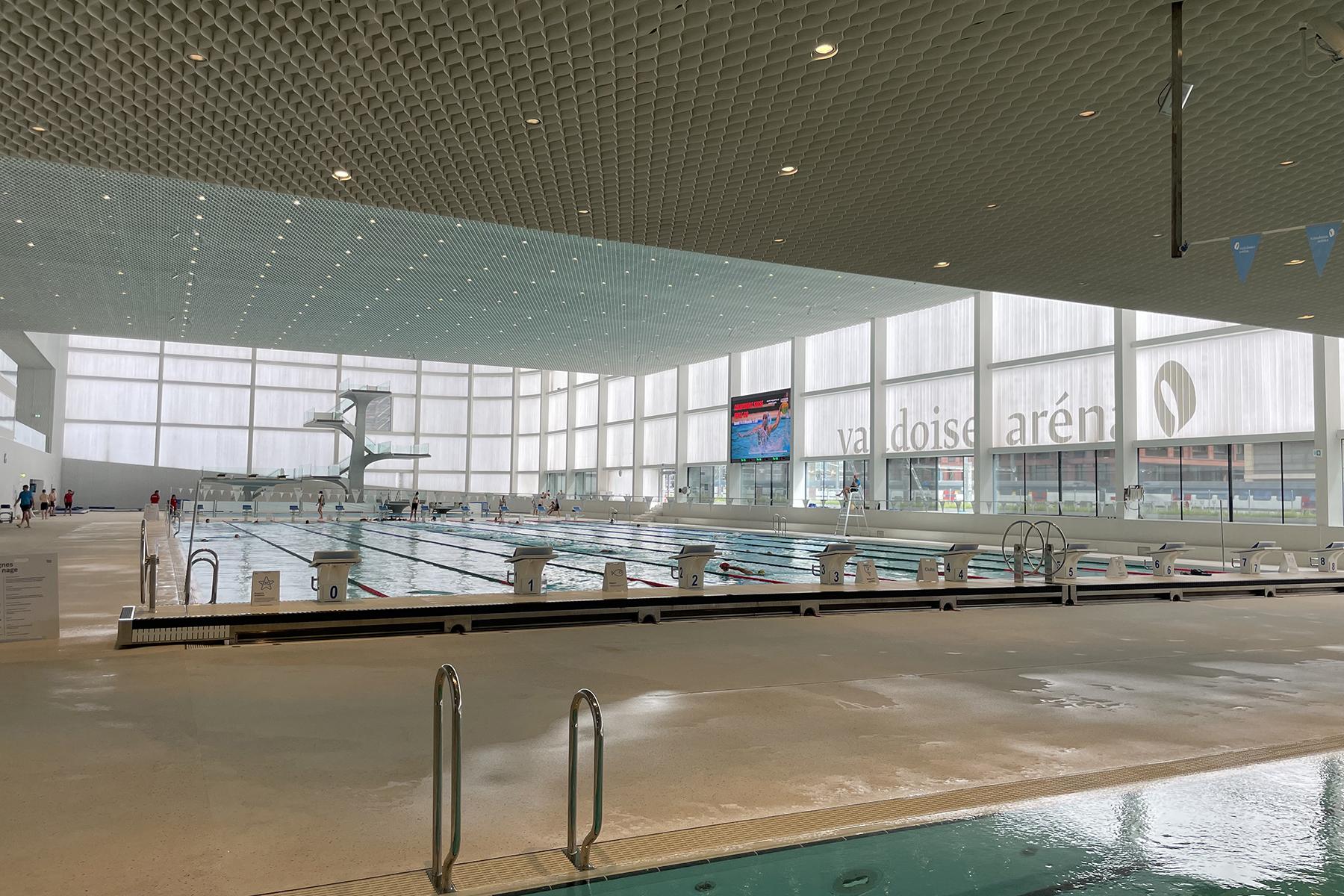
Vaudoise Arena Lausanne: 50-meter swimming pool and diving pool with 1, 3, 5, 7.5, and 10-meter platforms
© Poseidon
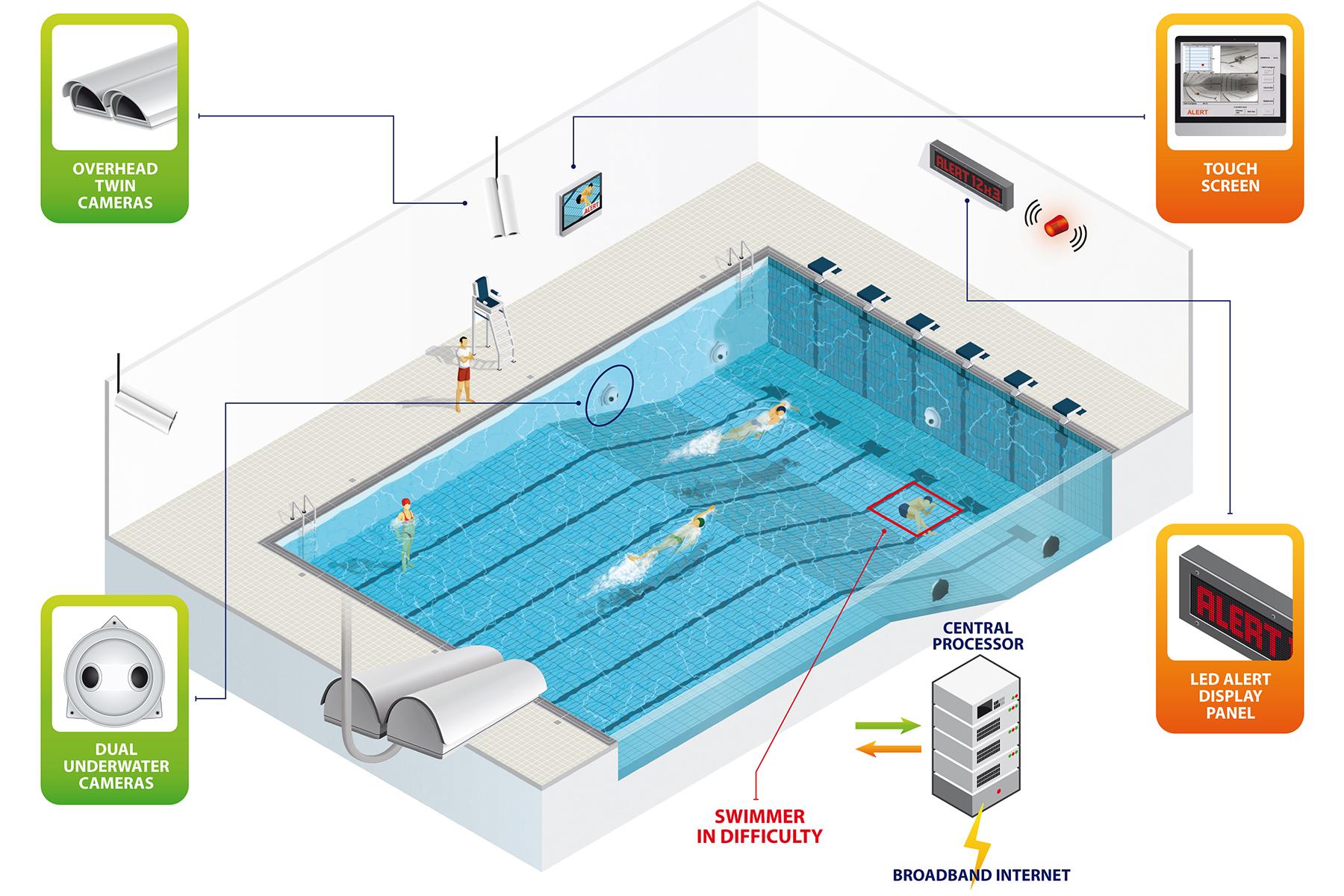
A key aspect of the technology is its supportive nature. The systems are not designed to replace lifeguards, but rather to serve as a supplement that enhances human perception. Especially in situations with high traffic or limited visibility, automated analysis offers a significant safety benefit. Continuous monitoring significantly reduces response time, thereby increasing the likelihood of a successful rescue. At the same time, false alarms are minimized through adaptive calibration to the specific pool conditions.
Poseidon is in use at over 300 public swimming pools worldwide and has proven itself even under demanding conditions. For example, it is used in training facilities at the elite sports level, where the highest safety standards are required. Thanks to Poseidon, more than 50 swimmers have already been rescued. With its modular architecture, the solution can be flexibly adapted to different facility sizes and requirements, from municipal indoor pools to large recreational and competition facilities.
Digitalization is opening up new possibilities for preventing swimming accidents. Smart monitoring systems, such as those from Poseidon, combine modern sensor technology with advanced data analysis, thereby providing an additional layer of safety in pool management. For operators, this means not only increased safety but also a sustainable investment in quality and trust, key factors for the long-term success of modern swimming pool facilities.