Text
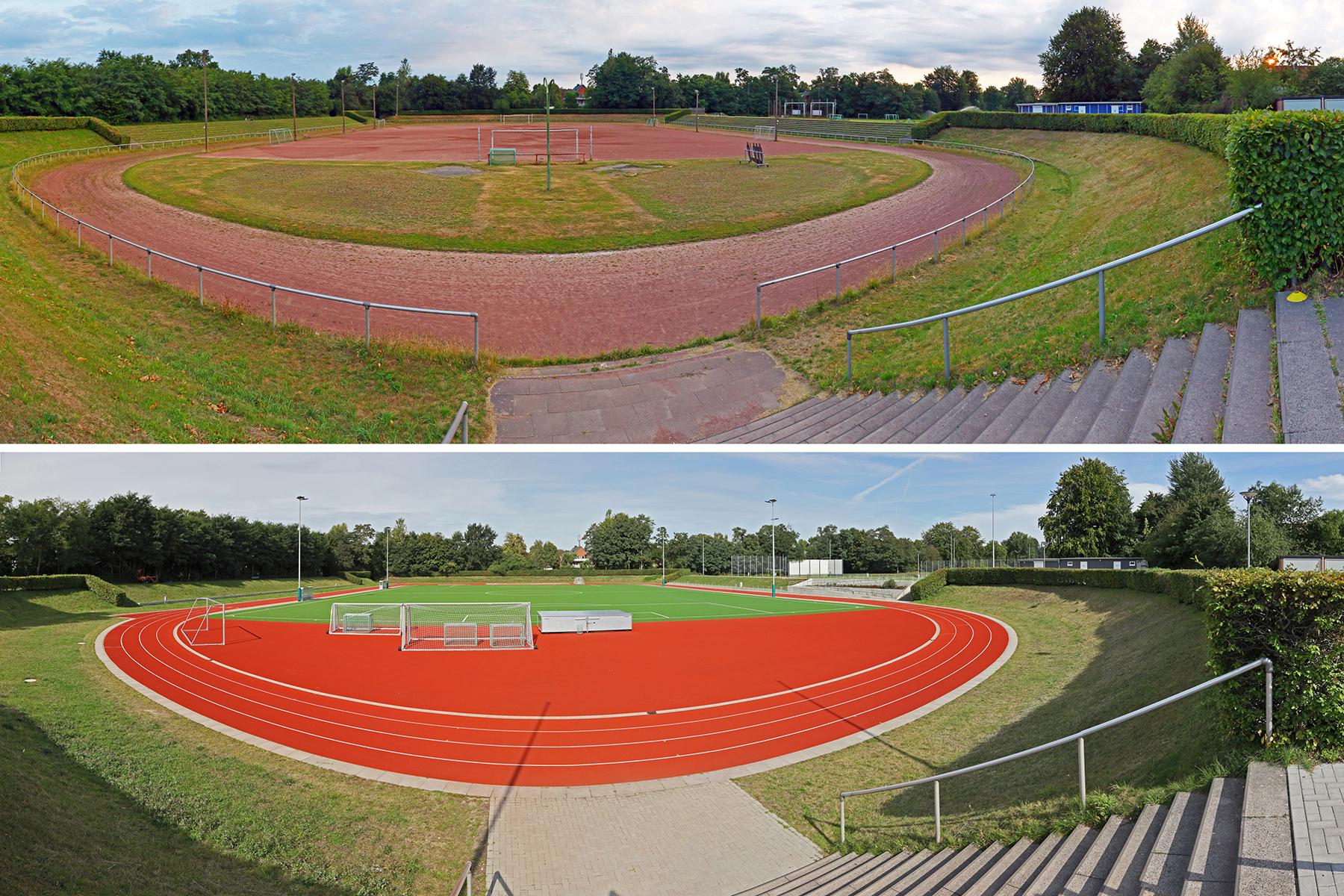
The modernisation of urban sports infrastructure has become a major priority in recent years, and not just in Hamburg. Many factors are driving this need for modernisation. Foremost among these is undoubtedly the competition for available space, coupled with a steadily rising number of users. Furthermore, through its Active City Strategy, Hamburg aims to encourage the city’s population as a whole – and not just sports club members – to become more active.
Other factors, such as the quantity and quality of open space, the shift towards multifunctional sports infrastructure (rather than highly specialised facilities), and improvements in efficiency in terms of both sports-related and land-use functions, also have a powerful effect on the modernisation approach and its specific manifestation.