

Header image
Bild
Moderator: Darryl Condon, IAKS Vice President, Canada
The Davos Baukultur Alliance champions “High-quality Baukultur” through practical tools, frameworks, and its eight-principle Quality System - promoting better living environments worldwide. Brest practice examples of sports and activity spaces from Denmark and Norway are driving sustainability through interdisciplinary collaboration, knowledge sharing, innovation, and supportive policy. This aligns with the need to bridge the gap between design intentions and actual performance. As shown in Portsmouth Ravelin, approaches like Soft Landings can deliver substantial energy savings in leisure facilities, ensuring that health-promoting spaces also meet ambitious environmental and climate goals in practice.

Quote portraitBild
Anne studied biology, then architecture, attaining her doctorate at the Technical University Dresden with a thesis on urban design and development. She worked in several planning offices, serving as Deputy City Architect and City Architect in two Swiss cities, before becoming Head of the Policy and Projects Service at the Swiss Confederation‘s Federal Office of Culture‘s „Baukultur“ department in 2023.
Dr Anne Pfeil Davos Baukultur Alliance, Switzerland
Quote portraitBild
André Flatner is Manager of BIAA, a newly established national competence network for sustainable sports and activity facilities, hosted by the Norwegian University of Science and Technology NTNU, and coo financed from the National Savings Bank Foundation, all county-municipalities and Ministry of Culture and Equality. He is former director of the department for public health and physical activity in the City of Fredrikstad and has been the President of the IAKS Nordic section since 2021. He is also on the advisory board to Tverga, a national resource center for self-organized sport in Norway.
André Flatner Manager BIAA, NTNU, Norway
Quote portraitBild
Evald Bundgaard Iversen is Head of the Research Centre for Sports, Health and Civil Society at the University of Southern Denmark. His research has particularly dealt with issues around the organization steering and management of (public) sports facilities. Recently, a particular focus has evolved on the possible dilemmas between the different aspects of sustainability with regards to sports facilities.
Evald Iversen Associate Professor, University of Southern Denmark
Quote portraitBild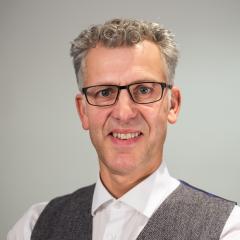
Mike is working closely with sport governing bodies such as FINA, UCI, IAAF, and ICF, Mike has extensive knowledge of the requirements for sports facilities and is passionate about the importance of active infrastructure in towns and cities. He sits on the IAKS International Expert Aquatics Circle and is also a representative of the International Union of Architects.
Mike Hall Partner, FaulknerBrowns, United Kingdom
Quote portraitBild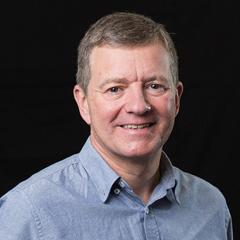
Mark is a Director of Engineering and the Sports Sector Leader at Max Fordham, with decades of experience in designing high-performance, sustainable sports facilities. His impressive portfolio includes everything from Sport England‘s “optimum” sports halls to the Olympic Water Polo Arena for London 2012, and the multiaward-winning Oriam (Scotland‘s National Performance Centre).
Mark Palmer Director and Partner, Max Fordham, United Kingdom
Welcome and introduction
Dr Stefan Kannewischer, IAKS President, Switzerland
The Davos Baukultur Allicance: Advancing high quality Baukultur from principles to practices
Dr Anne Pfeil, Davos Baukultur Alliance, Switzerland
The Davos Baukultur Alliance is a global, cross-sector community dedicated to improving living environments by providing practical knowledge, frameworks and tools to promote good practice. It is based on the holistic concept of „High-quality Baukultur“ and the eight principles of the Davos Baukultur Quality System, which serve as a tool to positively enhance the quality in planning and practice.
Holistic approaches to sustainable recreational environments: The Nordic way of knowledge enhancement
André Flatner, NTNU, Norway
Evald Iversen, Associate Professor, University of Southern Denmark
Denmark and Norway are actively advancing sustainability in the design, construction, and management of sports and activity spaces through collaborative, knowledge-based initiatives. Both countries emphasize: Interdisciplinary collaboration across sectors; knowledge sharing and capacity building; Practical innovation to address environmental challenges; and policy influ¬ence to support long-term sustainability goals. These efforts reflect a growing commitment in Scandinavia to ensure that recreational spaces not only promote health and community but also contribute positively to environmental and climate goals.
The soft landings process for better building performance
Mike Hall, Partner, FaulknerBrowns, United Kingdom
Mark Palmer, Director and Partner, Max Fordham, United Kingdom
Government regulations are driving better energy performance in new leisure facilities, but swimming pools still show large in-use energy cost variations despite high-spec designs. Beyond standards like BREEAM, LEED, and Passivhaus, adopting a soft landings approach is key to closing the gap between compliance and real-world efficiency. Mike and Mark will outline this process and the substantial savings achieved at Portsmouth Ravelin.