

Header image
Bild
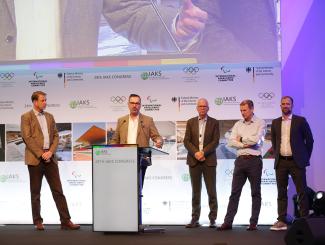
Sustainability in synthetic sports surfaces requires action across the full life cycle—from planning and design to innovation, maintenance, and circularity.
These presentations explore how end-of-life strategies and the 4P Sustainability lens can guide smarter decisions, how hockey is navigating the pressures of climate change, and how industry is responding to concerns over plastics with new solutions. The importance of long-term maintenance is highlighted, alongside inspiring examples of recycling and reuse that close the loop. Together, these insights show how sport can balance performance, access, and environmental responsibility for a more sustainable future.
Moderator: Martin Sheppard, Managing Director, Smart Connection Consultancy, Australia

Quote portraitBild
Martin is Chair of the IAKS Expert Circle on Outdoor Sports Surfaces and has overseen the planning, design, and procurement of over 200 synthetic surfaces across Australia. Committed to sustainability at every project stage, he promotes greater usage, longer lifespan, and broader benefits for both parklands and fields of play. He has published several books on synthetic turf, available free to IAKS members.
Martin Sheppard Managing Director, Smart Connection Consultancy, Australia
Quote portraitBild
Management experience in elite sports facility delivery for major international events, including Olympic Games, World Cups, World Championships and more. A global leader in sports facility delivery for over 20 years across sports including hockey, athletics and football.
Paul Kamphuis General Manager, Polytan Asia Pacific, Australia
Quote portraitBild
Alastair Cox is the Technical Director at the European Synthetic Turf Council (ESTC), the trade association for the European, Middle East and Africa synthetic turf industry. With over 45 years’ experience in the industry, his career has seen him primarily working in the testing and certification sectors. Today, his role with ESTC sees him leading their technical activities, including engaging with regulatory bodies, standardisation bodies and sports governing bodies. In addition to his work at ESTC Alastair is Visiting Professor of Sports Surface Innovation, at the UK’s Loughborough University.
Prof. Alastair Cox Technical Director, ESTC, United Kingdom
Quote portraitBild
Dennis Frank has been the head of the Institute for Sports Facility Testing since 2001. He expanded the range of services to include synthetic turf and synthetic systems for indoor and outdoor areas, as well as fall protection for playgrounds and activity areas.
Dennis Frank Managing Director, ISP Institute for Sports Facilities Testing, Germany
Quote portraitBild
A Sales Manager at GreenMatter B.V., Kilian promotes commercial growth and sustainable solutions with a strong focus on customer-oriented strategies. Thanks to his analytical mindset and management skills, he drives innovative results, creates value and contributes to the success of his organisation. His motivation lies in combining financial analysis with strategic insights to contribute to a greener future and build long-term partnerships.
Kilian Peschel GreenMatter, Netherlands
Planning for sustainability starts at the end, not the beginning
Martin Sheppard, Managing Director, Smart Connection Consultancy, Australia
This presentation explores how to plan, design, and procure truly sustainable synthetic sports surfaces by first understanding your goals and end-of-life management strategy. Using the 4P Sustainability lens—People, Planet, Prosperity, and Performance—it highlights how synthetic technology can increase access and usage, reduce environmental impacts and maintenance needs, lower whole-of-life costs, and ensure fit-for-purpose performance.
Hockey’s green journey: ambitions, setbacks, successes & learnings
Paul Kamphuis, General Manager, Polytan Asia Pacific, Australia
Hockey has embraced artificial turf as their preferred surface, but how does the sport balance performance and playability against environmental pressures, such as climate change, water scarcity and microplastics? How product innovation and green technology is shaping hockey’s future in the face of climate change.
How industry is innovating to provide sustainable synthetic turf sports surfaces
Prof. Alastair Cox, Technical Director, ESTC, United Kingdom
Synthetic turf surfaces provide high-quality, long-lasting sport surfaces that are able to sustain high levels of use. For some sports they are now the surface of choice, whilst for others they are the only solution when the demands of the climate or scarcity of land make natural surface un¬viable. But synthetic turfs are made from plastics, and as environmental concerns about the use of these materials grows, so do uncertainties about using synthetic turfs. The presentation will show will discuss how the synthetic turf industry is responding to these challenges and bringing sustainable solutions to market.
The importance of maintenance for long term sustainability of synthetic sports surfaces
Dennis Frank, Managing Director, ISP Institute for Sports Facilities Testing, Germany
Proper maintenance is essential for the long-term sustainability of synthetic sports surfaces. Regular cleaning, timely repairs, and appropriate upkeep not only extend the lifespan but also ensure consistent performance and player safety. Neglect leads to premature wear, higher costs, and reduced usability. Effective maintenance protects investment, optimizes play quality, and supports environmental and economic sustainability.
How to recover, recycle and reuse: closing the loop for synthetic turf
Kilian Peschel, GreenMatter, Netherlands
This presentation will show how circularity can be brought into sports. Starting with planks and beams made from recycled worn out artificial turf, moving on to modular (sports) tile flooring, and now developing high-quality recycled plastic panels. The mission is to support raw materials policy and reduce turf waste through socially responsible solutions that make sports facilities more circular, now and in the future.