

Content
Text
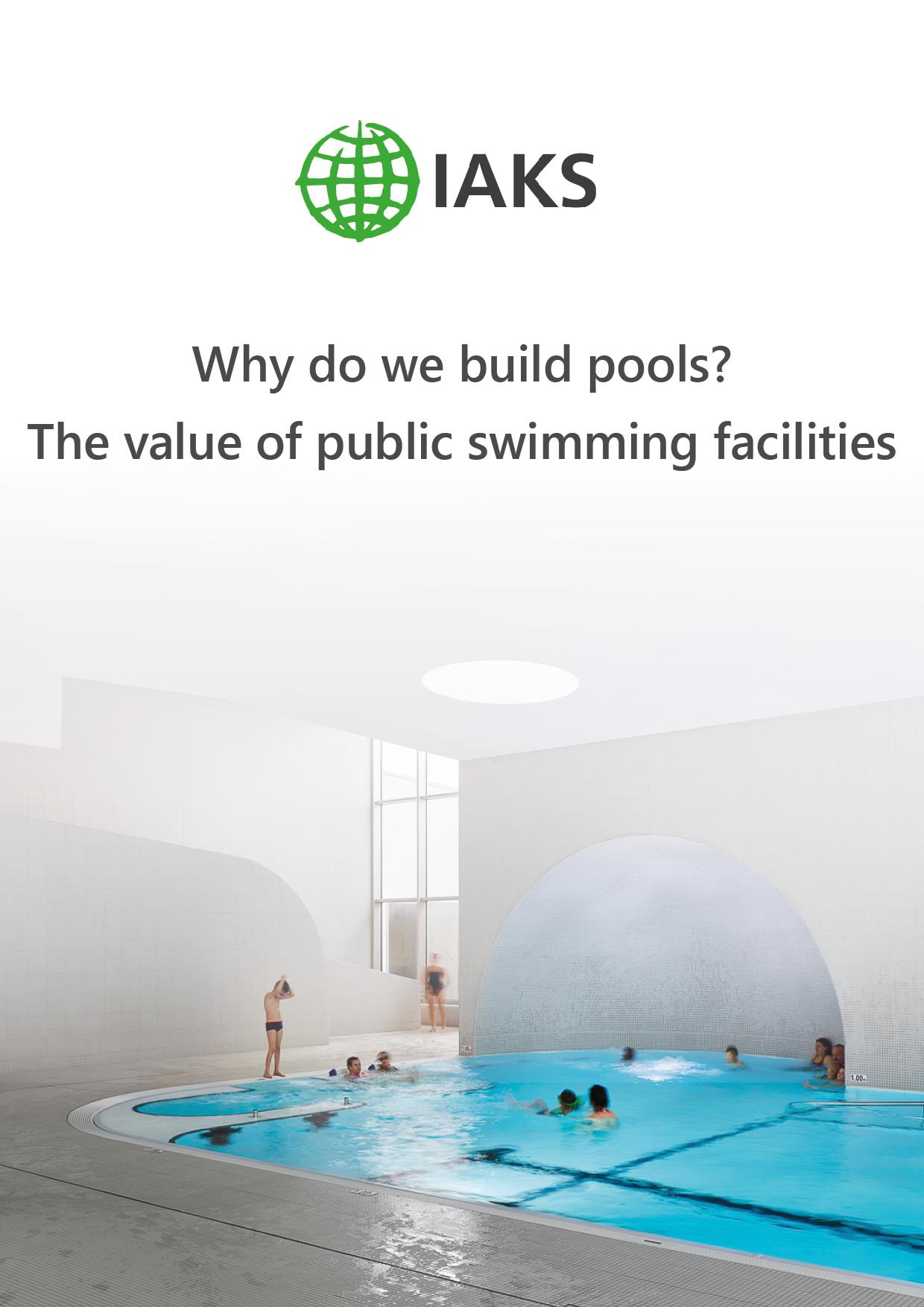
Why do we build pools?
The value of public swimming facilities
Swimming pools are some of the most well-used and loved public facilities. They bring people together across age, background, and ability, offering shared spaces that promote health, fun, inclusion, and social connection. Planning a swimming pool project begins by answering the simple question: Why do we build pools?
This paper serves as a tool for municipal staff and decision-makers to develop strong rationales and clear expectations for pool projects in their communities, delivering aquatic spaces with lasting social value for generations to come.
On eight pages, this discussion paper explores a broader spectrum of what pools can offer and makes the case for approaching them not simply as recreational facilities, but as strategic investments in public health, community development, and social infrastructure.
Setting clear goals early in the planning process – and reviewing progress against these goals as the project moves forward – is crucial to realizing this potential. These goals help guide design decisions, ensuring the final facility reflects the community it serves.
Editors: Darryl Condon, Warren Green, Gar Holohan, RJ Houston, Jens Oyas Moller, Frederic Tomarchio.
Chaired by Stefan Kannewischer.
Text
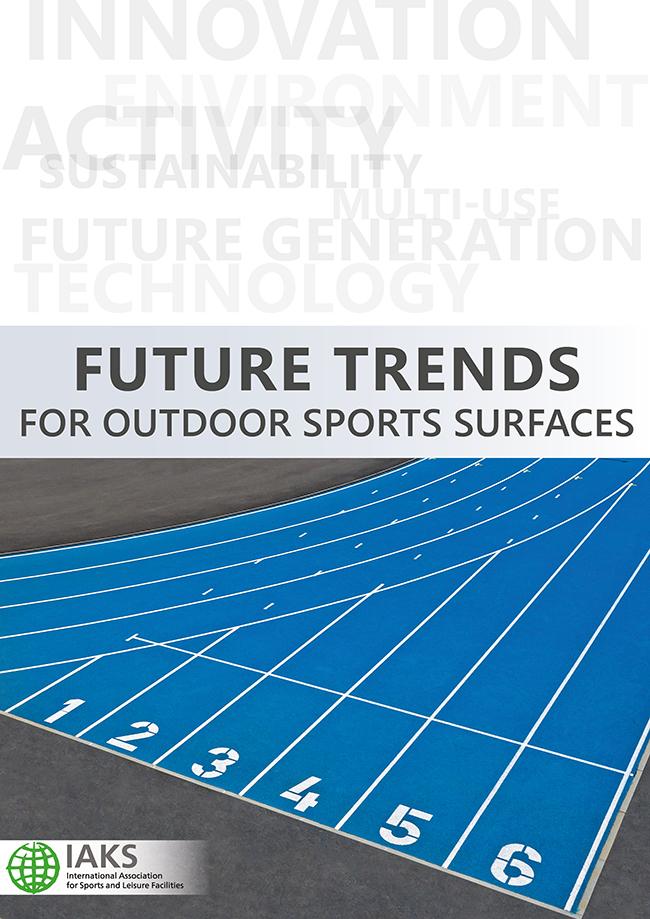
Future trends for outdoor sports surfaces
Innovative sports surface technology can help provide active environments
As sport has evolved over the past six decades, so has the technology used for the sports’ surfaces, with the move from granitic gravel to rubber athletic tracks in the late 1960’s, the adoption of watered synthetic turf fields for hockey in the 1970’s and 80’s to the advent of 3G fields for the football codes from the turn of the millennium. Now we are ready for the next generation of technology with waterless hockey fields, innovations in football turf fields, polymers made from sugar cane as opposed to petrochemicals and infills that are organic and more durable and the circular economy being a driving force for the industry.
The IAKS Expert Circle Outdoor Sports Surfaces has identified trends that reflect how the industry is embracing future needs, advancing technologies, and evolving community expectations, demonstrating industry leadership around climate change and environmental sustainability.
Authors: Bjorn Aas, Dennis Andersen, Dr Ulrich Berghaus, Nikolai Chrastka, Alastair Cox, Stefan Diderich, Matthias Eiles, Leonor Gallardo Guerrero, Jorge Fernando Garcia Unanue, Björn Hammel, Jarrod Hill, Peter Kaak, Øyvind Trygge Moltubakk, Walter Müller, Jorge Muntanola Sanz, Josep Roger, Niklaus Schwarz, Carlos Ruben Segura, Florian Szeywerth, Friedemann Söll, Douglas Wournell.
Text
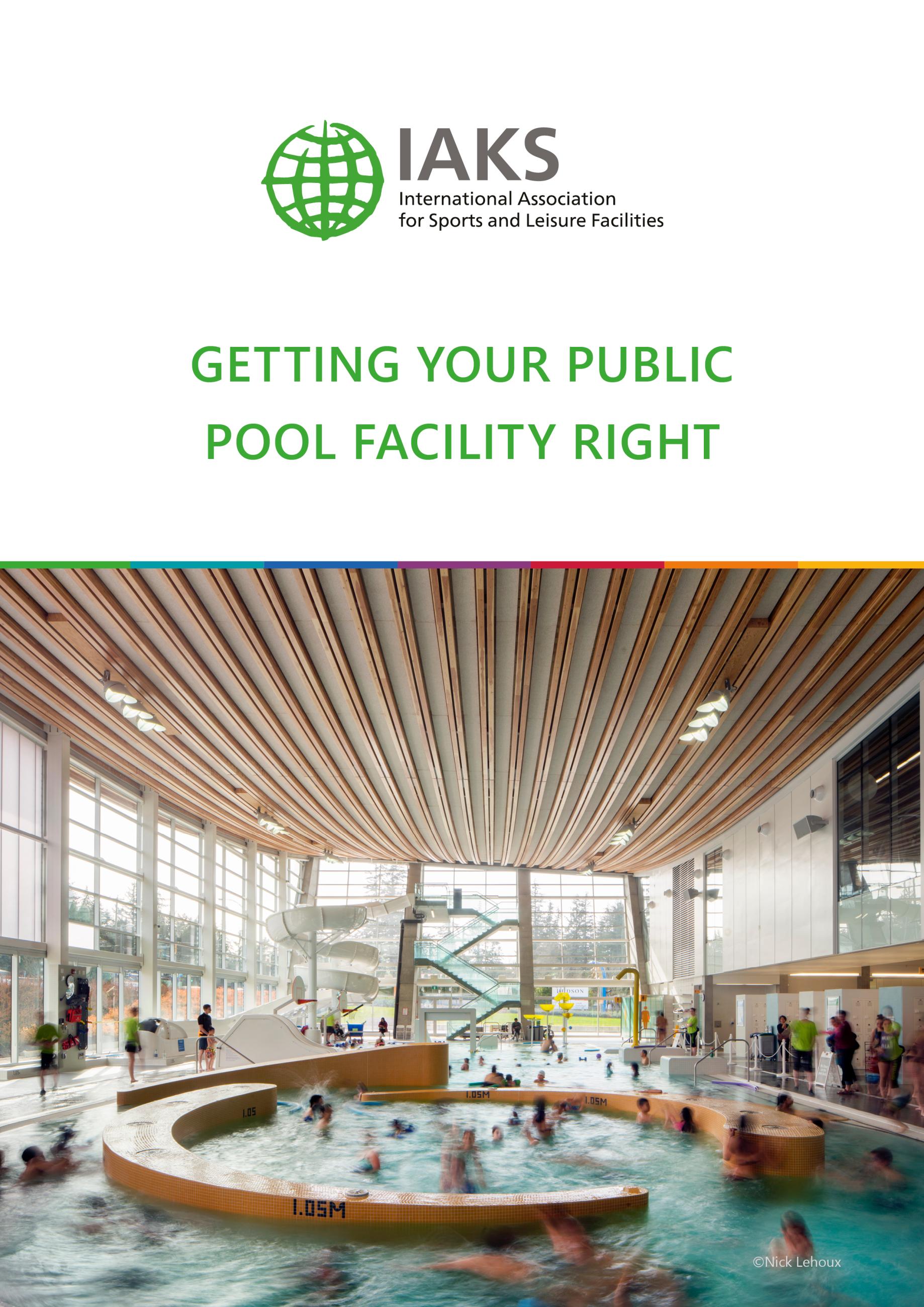
Getting your public pool facility right
Recommendations for the delivery of public swimming pools
Communities contemplating or starting on a public swimming pool project face a wide range of questions.
This white paper from the IAKS Pool Expert Circle offers advice for successful decision making.
Highly complex project – and often unknown territory Public swimming pool facilities are a cornerstone of local community infrastructure. They provide affordable opportunities to learn life skills, exercise and socialise, all of which contribute to supporting healthy communities. At the same time, they are deceptively challenging to build and operate. Often those responsible for delivering these projects, such as municipal staff and decision-makers, are facing the challenge of a new-build or renovated pool project for the first time in their careers. As pool facilities are highly specialised and complicated projects, it is important to have the right experience and expertise available from the very beginning.
Author: IAKS Pool Expert Circle
Text
2023 IAKS trends report
Design trends in sports and leisure facilities are continually evolving to meet the changing needs and preferences of users while addressing emerging challenges. As the world‘s leading association for these facilities, the IAKS aims to provide an overview of recent developments and industry trends.
We have asked IAKS board members, members of our Expert Circles, as well as board members from our national IAKS sections for their observations.
This trend report summarizes their feedback, starting with the most frequently mentioned topic of „environmental sustainability“ in the areas of „construction“ and „operation“. Other topics - ranked by the number of mentions - include „social sustainability“, „health“, „planning“, „outdoor physical activity“, „economic sustainability“, and „digitalisation.
“While it is impossible to capture the full range of factors involved in current approaches to sports and leisure facility design and operation, we hope you find this summary of trends received from our world-wide network helpful as you consider the future of your facilities.
IAKS Cologne, 20 October 2023
Editors: Darryl Condon, Harald Fux, Stefan Kannewischer (Chairman), Klaus Meinel
Text
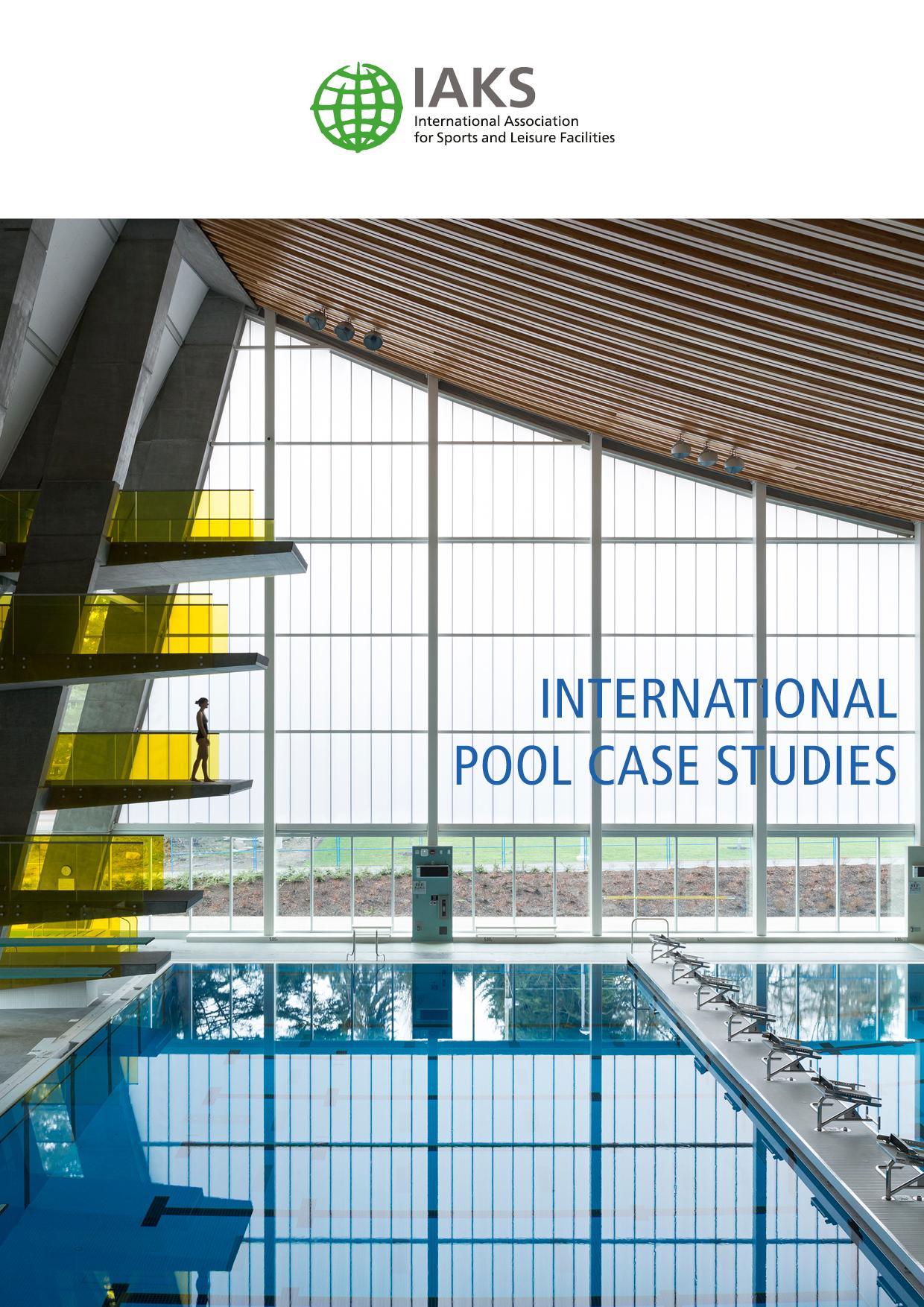
International pool case studies
Sports facilities – sports halls, outdoor recreation, artificial ice rinks, swimming pools and the like – are highly complex and have costly ongoing operational requirements. Over a facility’s lifetime, operating costs far exceed the construction costs; so careful planning is essential to ensure that the facility meets the needs of both users and the operator. While architectural design and experiential quality are key components for success, it must be ensured that ‘design follows function’.
Across the world, ownership models and project delivery processes vary considerably. In many countries, conventional sports facilities are funded and owned by the public or initiated and controlled by the public sector. The construction or retrofit of public buildings occurs infrequently, sometimes only once every few decades. Therefore, it is common that decision makers have minimal experience when delivering these complex public projects for the first time. Unfortunately, this can lead to projects being approached incorrectly or mismanaged. As such, it is essential to involve specialists to appropriately plan all stages of the project – from the pre-planning (or concept) stage through to operation.
This article presents an overview of an effective and goal-driven project process. It outlines the key project stages as shown in the diagram below, as well as the activities that must occur during each of these stages for a project to meet its full potential.
Editors: Warren Green, Haymo Huber, Darryl Condon, Jakob Færch, Christian Kuhn, Padraig Byrne, Bjørn Aas, Ruth Pujol Blume, Dr Stefan Kannewischer, Mike Hall
Text
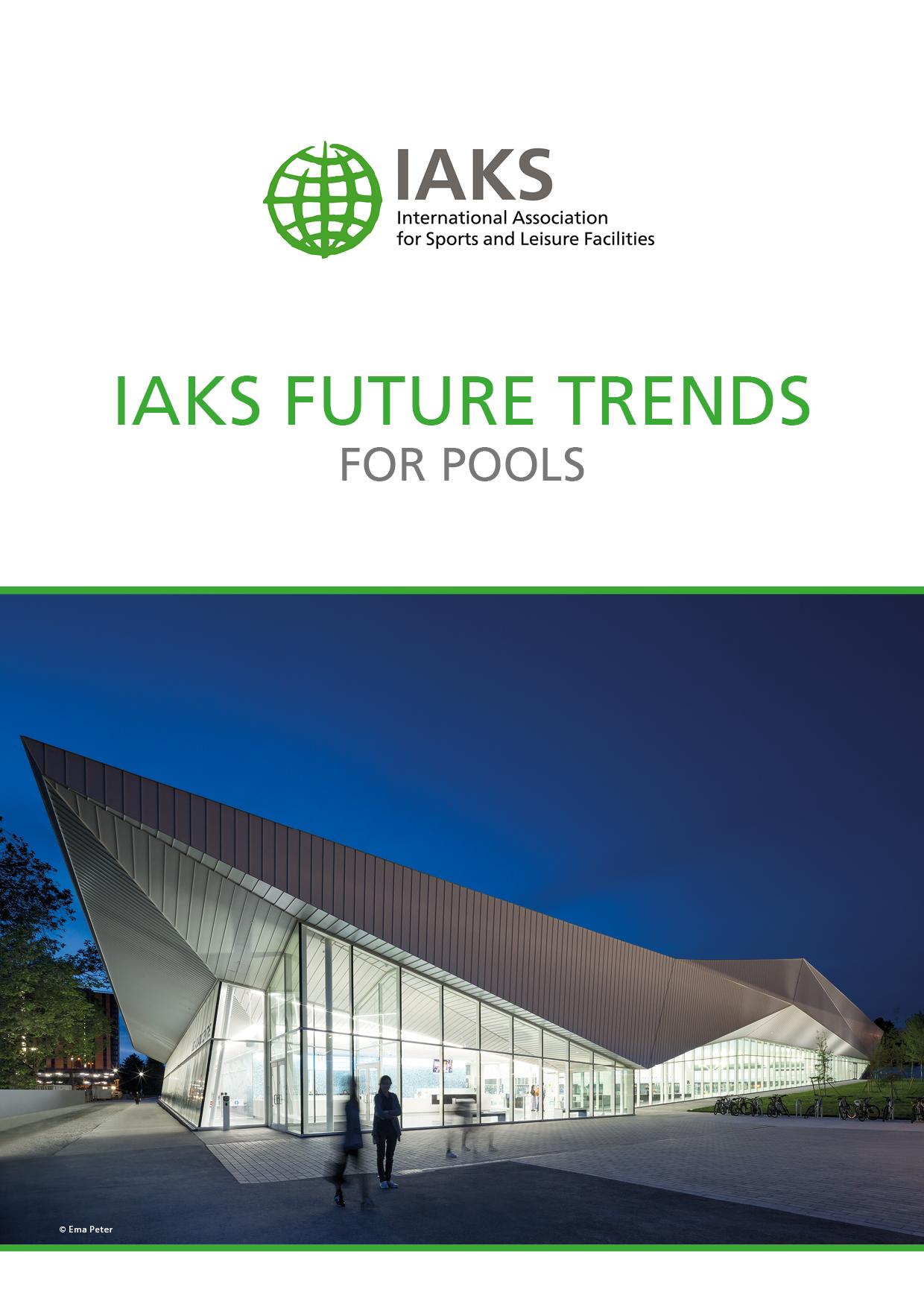
IAKS Future Trends for Pools
Swimming and water-based leisure have always been a human need and desire since ancient times and will continue to be so. Their physical and emotional benefits have always been recognised. The way people are taking the waters has changed and will continue to change over time, so pool facilities will have to adapt to evolving user behaviour accordingly.
The IAKS pool expert circle has identified the following IAKS future trends for public pools (in this paper ‘pools’ always stands for ‘public pools’ and does not include hotel pools).
These future trends outline important developments for professionals and non-professionals (e.g. politicians and other stakeholders) involved in pools around the world. These propositions describe aspects and trends observed by experts and do not claim to be exhaustive. Their order does not reflect their relative importance, and some of them may be contradictory. This is not surprising, as our world continues to become more complex and there is no one correct solution. The various unique needs and developments at a specific location have to be understood and integrated in a sustainable solution.
Editors: Bjorn Aas, Pere Ballart, Darryl Condon, Tom Devin, Paul Gerrits, Warren Green, Ole Gronborg, Michael Hall, Gar Holohan, Haymo Huber, Jürgen Kannewischer, Dr. Stefan Kannewischer, Dr. Christian Kuhn, Josef Lassnig, Rainer Pethran (†), Ruth Pujol, Marc Riemann, Ernst Ulrich Tillmanns
Text
IAKS future trends 2020 for sports and leisure facilities
With these future trends, IAKS wishes to outline important developments for professionals and non-professionals involved in sports and leisure facilities around the world. These propositions describe aspects and trends observed by experts and do not claim to be exhaustive. Their order does not reflect their relative importance, and some of them are contradictory. Not surprising, as our world has become more complex and there is no one correct solution. The various needs and developments at a location have to be grasped if a sustainable solution for a specific sports and leisure facility is to be arrived at.
Public space as leisure facility
The individualisation of our society and new ways of working with blurring boundaries between work and leisure are leading to stronger demand for individual sports like swimming, jogging and cycling. These are often performed in public spaces that are not limited by opening hours, e.g. cycling tracks without crossroads like the idea of skycycle in London.
This calls for multifunctional and safe public spaces. At the same time, workplaces need to integrate facilities for physical activities. Another opportunity is to open sports facilities (especially sports halls) to the individual, e.g. the Danish idea of sports halls as “indoor commons“.
Editors: Dr Stefan Kannewischer, Conrad Boychuk, Jesús del Barrio Díez, Horst Delp, Jorge Ehlers, Klaus Meinel, Yoshiko Osamura
Contact
Company Logo
Bild

Firstname
Silke
Lastname
Baltzer
Function
Event and membership management
+49 (0) 221 168023-11
baltzer@iaks.sport